You walk into your living room. You’ve rearranged the throw pillows. You bought that new lamp from that store you drove 45 minutes to get to. You even spent a Saturday afternoon moving the sofa three inches to the left — which, if we’re being honest, nobody noticed but you. Then an interior designer walks in — and what interior designers notice first is not what you spent hours on. In the first six seconds, they’ve already clocked about twelve things you never even thought about.
Not in a judgmental way. More like how a chef walks into a kitchen and immediately knows if the mise en place is off. It’s professional autopilot — pattern recognition built from years of walking into rooms and quietly thinking “I know exactly what’s wrong here.”
The good news? Once you know what interior designers notice first, you can’t unsee it either. And fixing these things? Most of them cost nothing but attention.
Let’s get into it.
1. What Interior Designers Notice First: The Light
Before they’ve even looked at your furniture, a designer reads the light in the room. Not just how much light — but the quality, direction, and color temperature of it.
Here’s the thing most people get completely wrong: they rely on one overhead fixture to do all the work. That is the design equivalent of using a floodlight as a dinner candle. It flattens everything. It washes out depth. It makes a room feel like a dentist’s waiting area, no matter how nice your sofa is.
Designers call this “layered lighting” — and it’s one of the first things they mentally audit when they walk in. You need ambient light (the overall wash), task light (for reading, cooking, working), and accent light (for drama, depth, and highlighting the things you actually want people to look at).
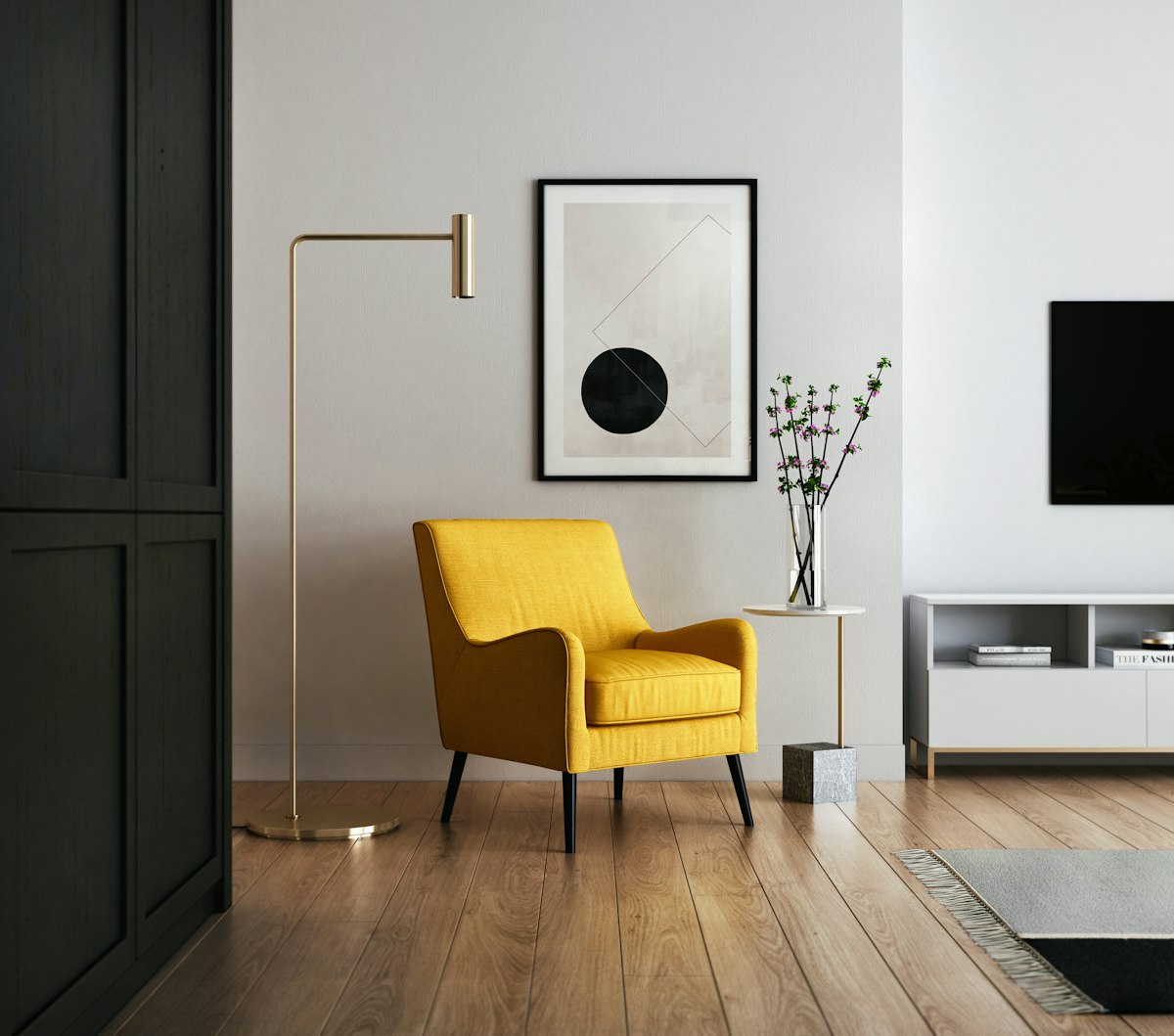
The fix? Add a floor lamp in a dark corner. Put your overhead light on a dimmer. Swap that cold 6500K bulb for a warm 2700K one. Suddenly, the same room feels like a different place — and you didn’t move a single piece of furniture.
2. Furniture Placement: The Interior Designer Red Flag You’re Ignoring
Second thing a designer clocks: furniture placement. Specifically, whether everything is pushed against the walls like it’s scared of the center of the room.
This is the number one layout mistake in almost every home. People think pushing furniture to the perimeter makes a room feel bigger. It doesn’t. It makes it feel like a sad school dance where everyone’s hovering at the edges, afraid to commit.
What actually makes a room feel spacious and intentional is creating a conversation zone — pulling pieces toward the center, grouping them around a focal point, and letting them breathe. The negative space between furniture and wall is what gives a room its “exhale.”
The classic fix: pull your sofa at least 6–8 inches off the wall. Float your chairs. Anchor the whole group with a rug. You’ll feel the difference immediately — and so will every guest who sits down and actually feels like they’re in a room, not perching on the edge of one.
3. Rug Size: What Interior Designers Notice and Wince At
Speaking of rugs — a designer will notice yours in about three seconds flat. And if it’s too small, they will feel a tiny pang of interior design grief that they will professionally conceal.
The small rug under the coffee table with all four sofa legs dangling off the edge? That rug is doing the opposite of what you think. Instead of grounding the room, it’s making your furniture look like it accidentally wandered into the wrong space.
The rule of thumb: in a living room, at least the front two legs of every major seating piece should sit on the rug. Ideally, all four. The rug defines the zone. It tells the room “this is the living area” — and everything else responds to that boundary.
When in doubt, go bigger than you think you need. Literally always. The number one rug regret in interior design is not going big enough. The number two regret is also not going big enough.
4. The Clutter That Disguises Itself as Décor
Here’s a sneaky one. A designer walks in and immediately identifies which items in the room are intentional and which items simply… accumulated there over time and never left.
Clutter is obvious. But what’s harder to spot is the stuff that looks like decoration but is really just visual noise — seventeen candles that were never lit, a collection of small objects on a shelf that don’t relate to each other, random frames hung at inconsistent heights because “it felt cozy.”
Designers think in terms of intentionality vs. accumulation. Every object in a well-designed room earns its place. It either has meaning, aesthetic purpose, or both. The rest? Ruthless editing.
The exercise they’d give you: take everything off one surface. Look at it empty for 30 seconds. Now only put back the things you’d keep if you were moving to a hotel for six months and could only bring ten objects. That’s your real décor. Everything else is storage pretending to be style.
5. Curtains Hung Wrong: What Interior Designers Notice Immediately
Most people never look up in a room. Interior designers always look up — and what they notice first is where the curtains start.
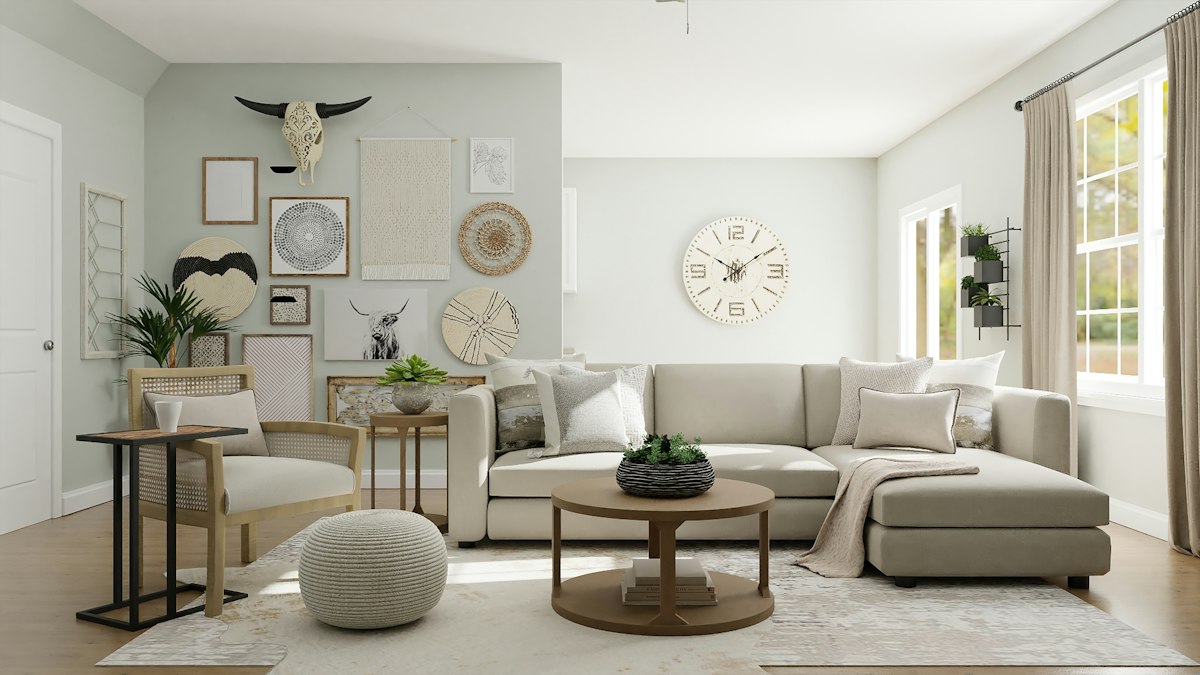
If your curtains start at the window frame and end just below the sill, you’ve visually chopped your ceiling height in half. And even an 8-foot ceiling with low-hung curtains feels like a basement.
The fix is almost embarrassingly simple: hang your curtains as close to the ceiling as possible, and let them fall to the floor. Full stop. This one change — no furniture moved, no paint, no new purchases — makes a room feel dramatically taller, airier, and more expensive.
Bonus points for curtains that actually pool slightly on the floor. It reads as intentional luxury, not accident. And the good news is that curtains long enough to do this cost basically the same as short ones. The only difference is knowing to ask for them.
6. The Color Story — Or the Lack of One
A designer reads the color in a room like a paragraph. They’re looking for a coherent narrative — does this room know what it is?
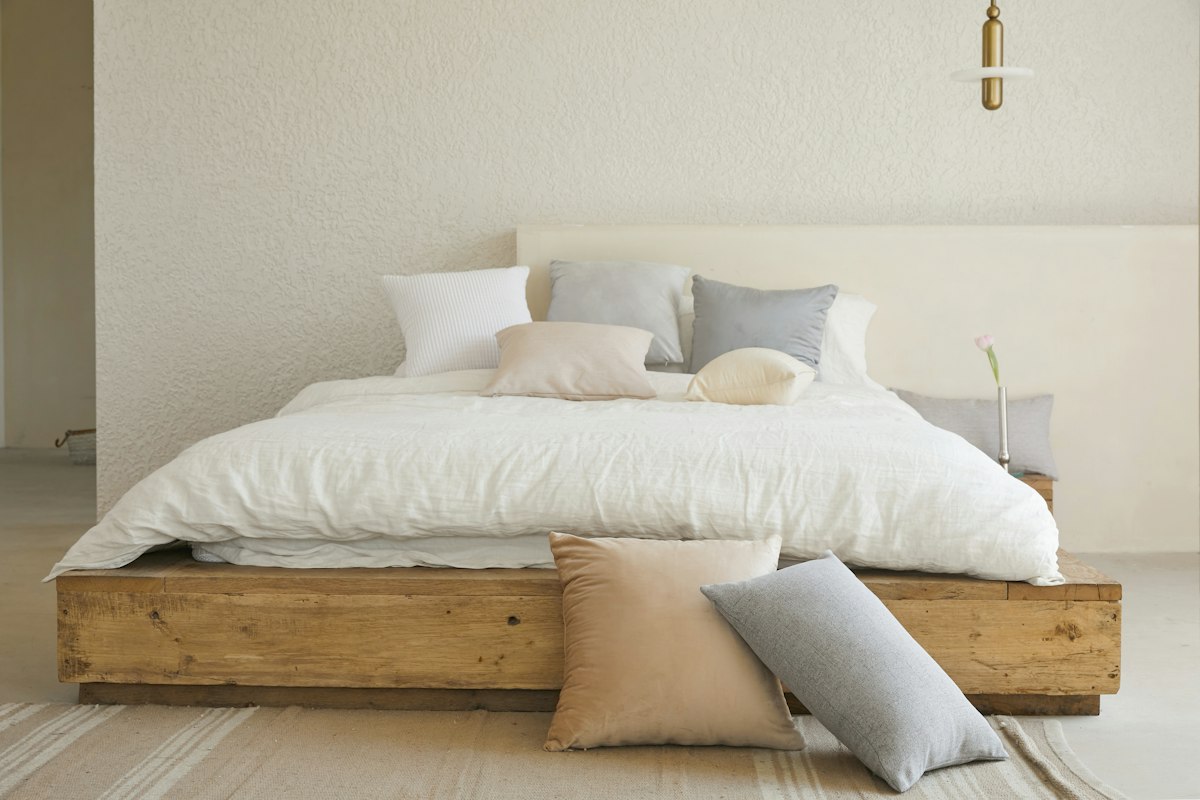
The most common issue isn’t bold color choices. It’s the opposite: a room that’s so cautiously neutral that it has no identity at all. Beige sofa, greige walls, white ceiling, tan rug. Everything coordinates but nothing connects. It’s not a room — it’s a beige ceasefire.
What interior designers notice first about color is the lack of a color story with tension. Not chaos — just enough contrast to make the eye move, enough warmth or cool to create a mood, and at least one unexpected choice that makes the room feel like it was put together by a person, not an algorithm.
That unexpected element might be a deep forest green bookcase against a warm white wall. A terracotta vase on an otherwise cool-toned shelf. A single piece of art that introduces a color the room doesn’t otherwise contain. These are the moments that make people stop and feel something — which is, ultimately, the whole point of designing a room.
7. Art Hung at the Wrong Height (The Most Fixable Mistake)
This one. This is the one that makes interior designers quietly close their eyes and breathe.
Art hung too high is the most common, most easily fixed, and most persistently repeated decorating mistake in the history of walls. People hang art where they think it should go — which is usually about a foot higher than it actually should.
The rule is simple and universal: the center of the artwork should be at eye level — roughly 57 to 60 inches from the floor. That’s it. That’s the whole rule. Museum curators use it. Designers use it. And yet, somehow, most art in most homes is hanging up near the crown molding like it’s trying to escape.
When art is hung at the right height, it communicates with the furniture beneath it. It feels grounded. It’s part of the room, not hovering above it like a surveillance camera.
Get a measuring tape. Do this today. It takes four minutes and it will immediately make your home look like it was designed on purpose.
8. The Bedroom: Where Most Interior Design Mistakes Live
Interior designers look at bedrooms with particular attention because this is where the most common — and the most forgivable — mistakes happen. People treat bedrooms like afterthoughts because “nobody sees them.” But you see them. Every single day, first thing in the morning and last thing at night.
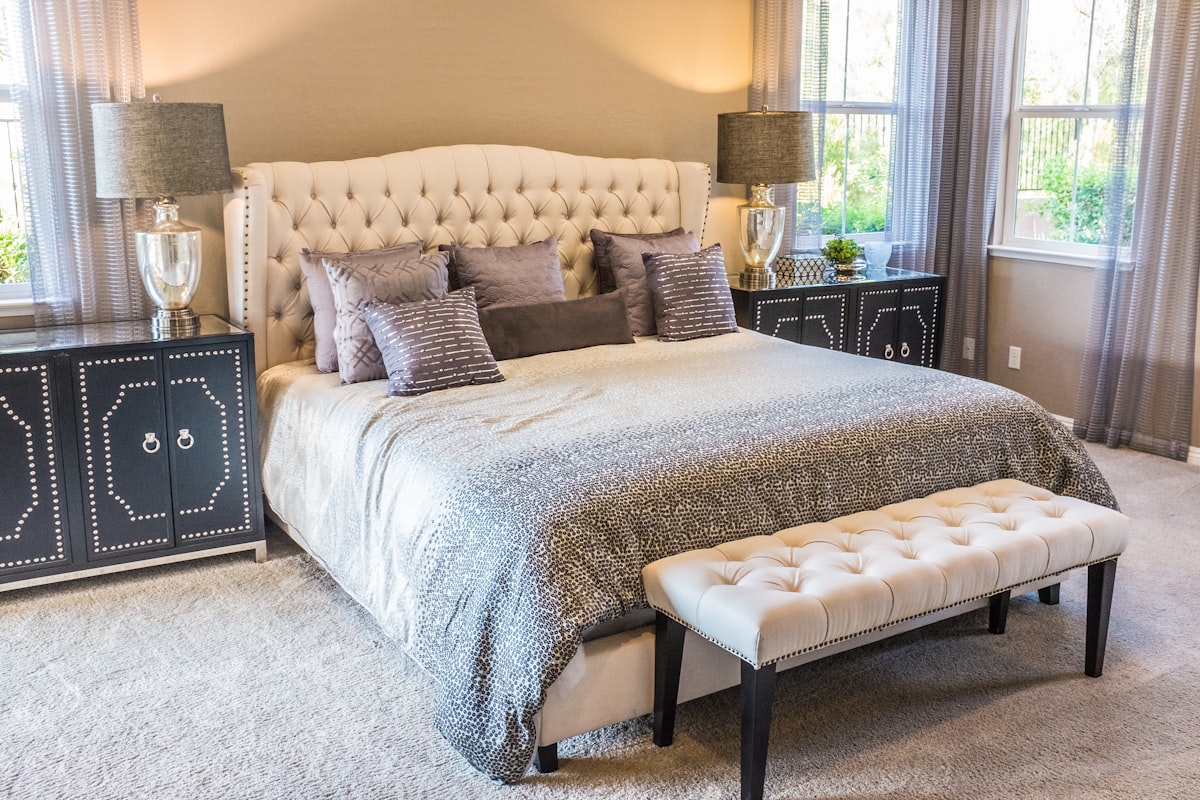
The things interior designers notice first in a bedroom: Is the bed properly centered on the wall, or shoved into a corner because the room “felt small”? Are the bedside tables mismatched in a way that reads as unfinished rather than eclectic? Is the headboard too small for the bed — a double headboard on a king mattress, like a small hat on a large head?
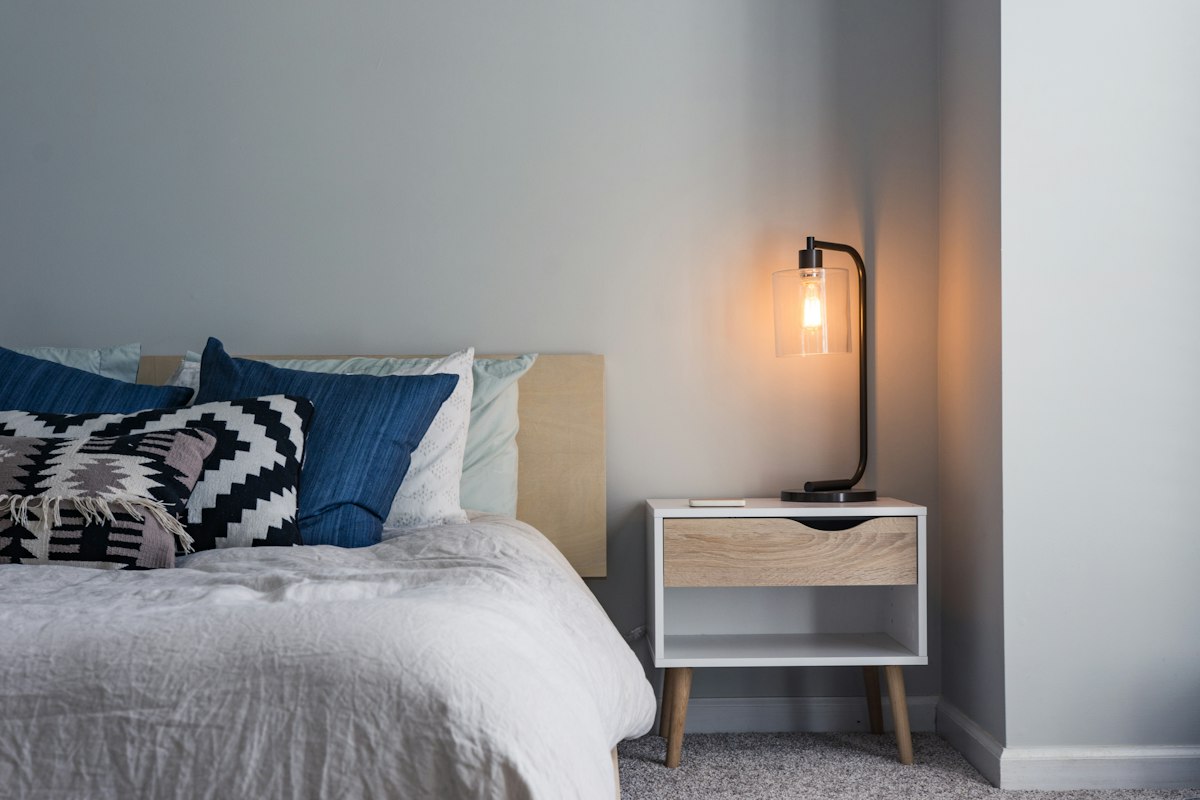
And the bedding. The bedding tells a story. Flat, uninviting, comforter-only beds are the visual equivalent of a monotone voice. A bed with layers — a duvet, some texture, a few well-placed pillows — signals that this is a room someone thought about. It doesn’t need to look like a hotel. It needs to look like your hotel. Your version of comfort, elevated.
The Real Takeaway: Rooms Don’t Have to Be Expensive to Be Good
Here’s what every interior designer knows — and what the furniture industry prefers you didn’t:
Most of what makes a room feel designed has nothing to do with how much money you spent. It has everything to do with attention. Light, proportion, scale, color, intentionality — these are free. Or close to it.
The rooms that stop you in your tracks aren’t always the ones filled with expensive things. They’re the ones where someone clearly gave a damn. Where the art is at the right height. Where the rug is big enough. Where the light is warm and layered and makes you feel, for reasons you can’t quite articulate, like you want to stay.
That’s the thing a designer notices when they walk into a room — not just what’s there, but whether someone meant it to be there.
Start meaning your room. It’s simpler than you think.