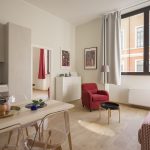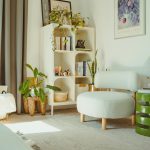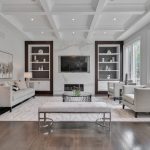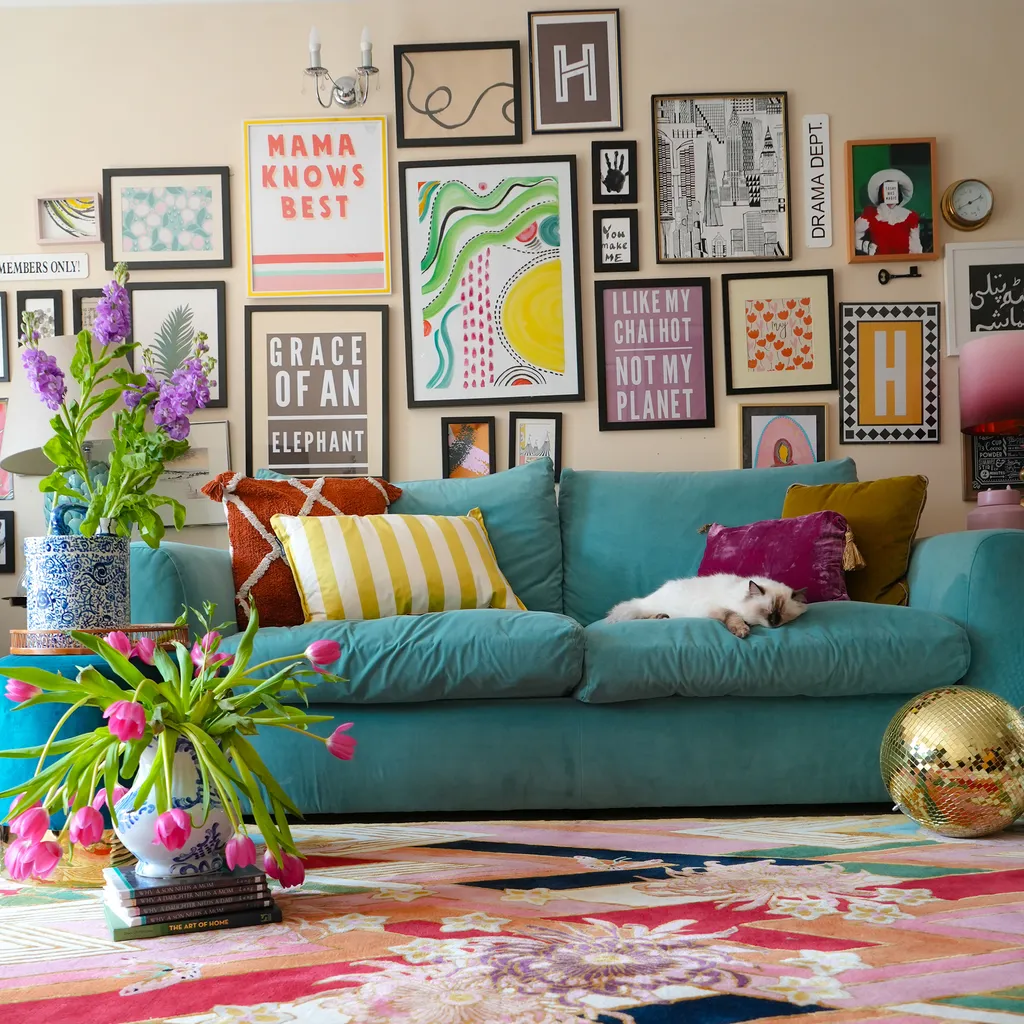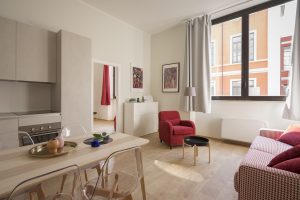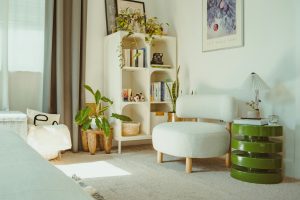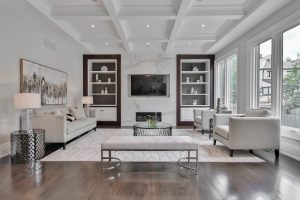


You have 450 square feet. Your friend has 450 square feet. But somehow, their place feels twice as large. What gives?
Here’s the uncomfortable truth most interior design articles won’t tell you: your apartment doesn’t feel small because it is small. It feels small because of how it’s set up. Lighting, furniture scale, layout, visual clutter, and ceiling perception do more to shrink or expand a space than the number on your lease ever could.
This guide breaks down the real culprits — backed by research in environmental psychology and spatial design — and gives you actionable fixes for every one of them.
The Psychology of Perceived Space
Before we get into the fixes, it helps to understand the science. Your brain doesn’t measure your apartment in square feet — it measures it in perceived volume. And perceived volume is almost entirely driven by visual cues, not physical dimensions.
A 2019 study published in the Journal of Environmental Psychology found that room brightness, ceiling height perception, and the absence of visual clutter each independently impacted how spacious participants rated a room — sometimes more than the room’s actual size.
“The perceived spaciousness of a room is not simply a function of its physical dimensions, but a complex perceptual outcome shaped by lighting, color, order, and furnishing scale.”
— Acking & Küller, Environmental Aesthetics (foundational research, Uppsala University)
In other words: your apartment is a perception problem, not a square footage problem.
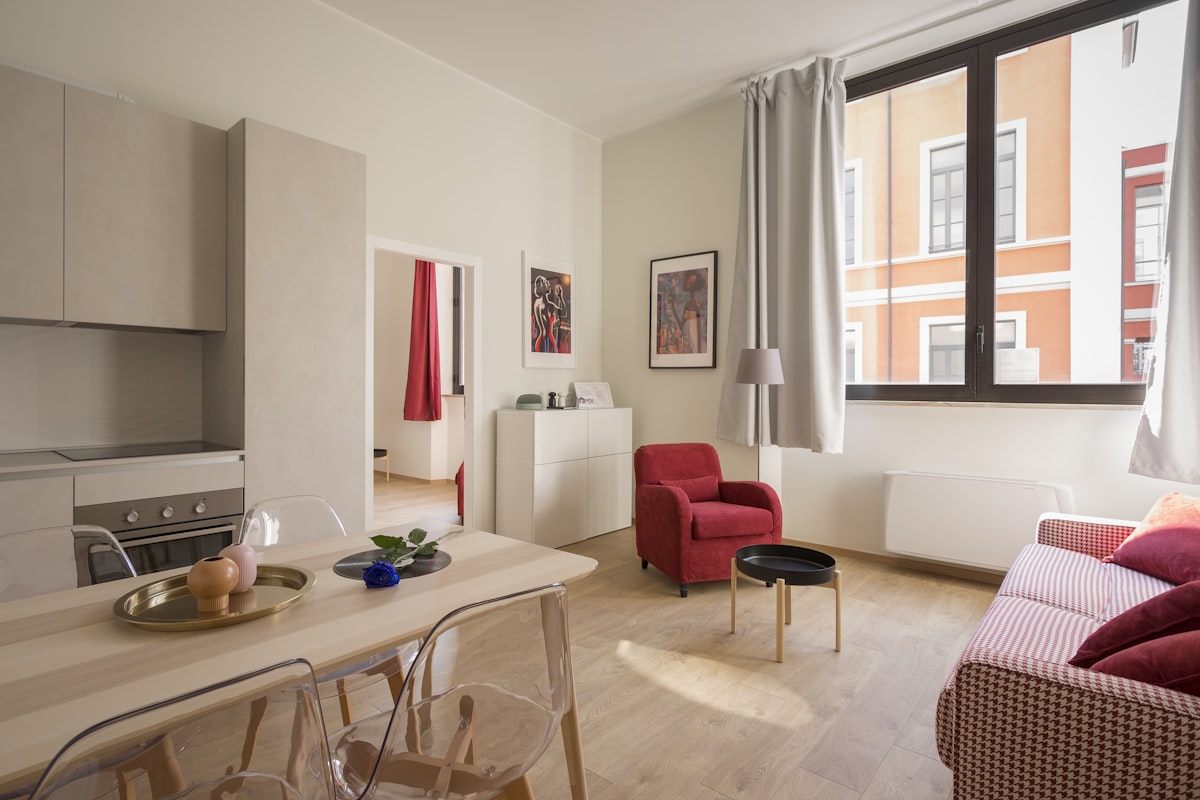
Culprit #1: Furniture That’s Too Big (or Too Small)
This is the single most common mistake in small apartments. People either cram in oversized furniture — because it “looks cozy” in the store — or they go the opposite direction and fill the space with too many small pieces, creating visual noise.
Both kill the feeling of space.
The Scale Rule
Interior designers use a principle called furniture-to-room ratio. The general guideline: furniture should occupy no more than 60% of a room’s floor area, with clear traffic paths of at least 36 inches in living areas and 24 inches in tighter zones like bedrooms.
According to the National Kitchen and Bath Association (NKBA) clearance standards and widely adopted interior design guidelines, maintaining open floor lanes is one of the most reliable ways to make a small room feel larger — regardless of how you furnish it.
“The most spacious-feeling small rooms aren’t the most sparsely furnished — they’re the most intentionally furnished.”
What to Do Instead
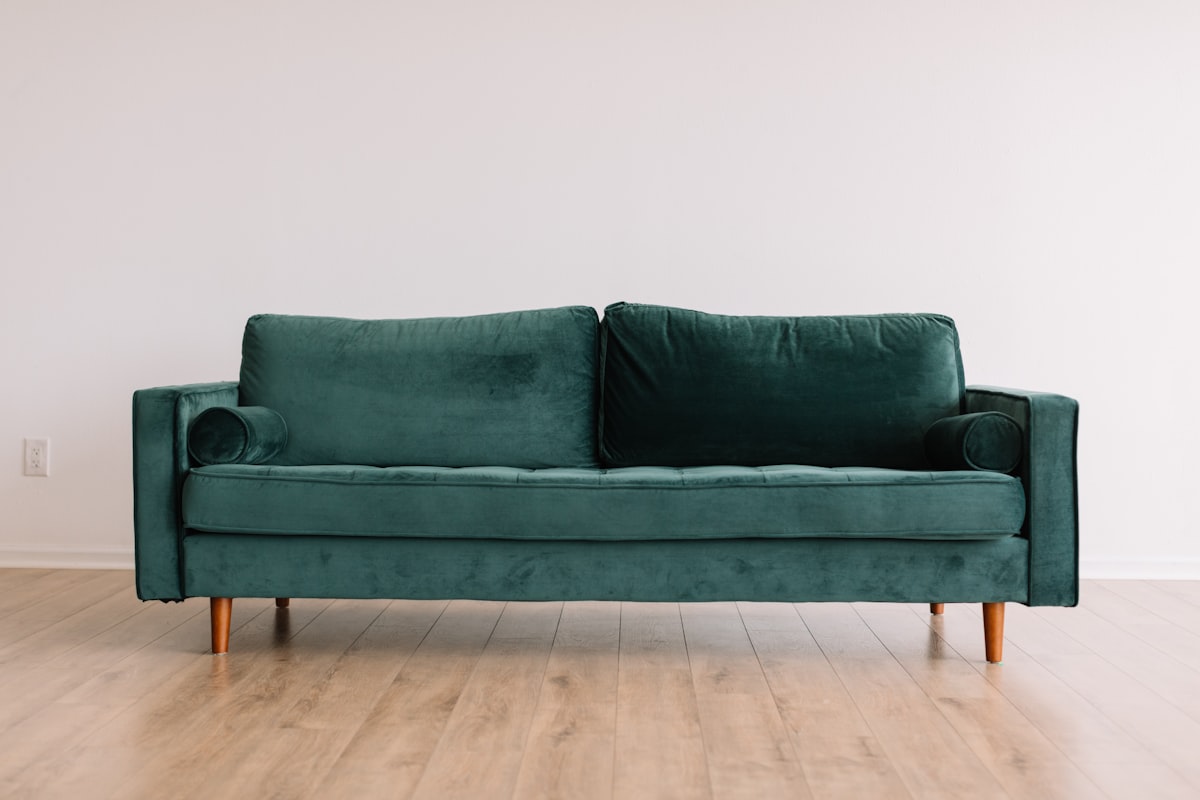
- Choose a single statement sofa instead of a full sectional. A sofa with exposed legs creates visual breathing room.
- Use a round dining table if possible — corners take up more perceived space than curves.
- Skip the coffee table (or go with a small, transparent one). Nesting tables or ottomans offer function without the visual bulk.
- Go vertical — tall bookshelves draw the eye upward, making ceilings feel higher.
Culprit #2: Lighting That Flattens the Space
Here’s a stat that surprises most people: lighting accounts for up to 40% of a room’s perceived size, according to researchers at the Lighting Research Center at Rensselaer Polytechnic Institute. A dark room shrinks. A well-layered, bright room expands.
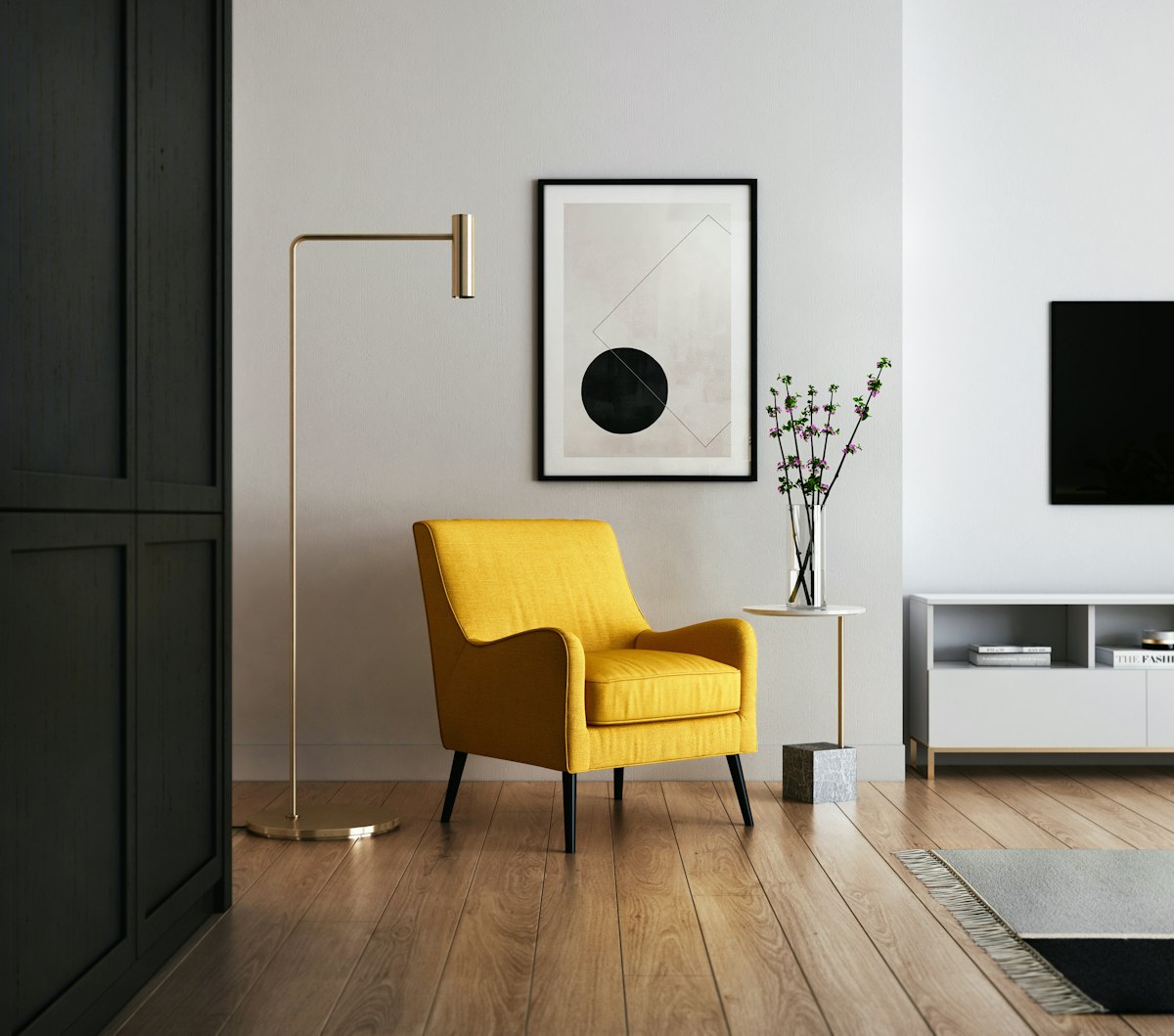
The biggest offender in small apartments? A single overhead light source. One ceiling fixture creates a flat, even wash of light that eliminates shadows and depth — and depth is what makes a room feel three-dimensional.
The Lighting Layer Formula
Professional designers use three layers of light in every room:
- Ambient light — the base illumination (ceiling fixture, recessed lights)
- Task light — focused light for specific functions (desk lamp, reading lamp)
- Accent light — light that highlights architectural features or creates visual interest (uplighters, LED strips, picture lights)
In a small apartment, the goal is to push light toward the walls and ceiling. This creates the illusion of a larger perimeter. Wall sconces, floor lamps angled upward, and LED strip lighting behind furniture all achieve this effect.
“Light a room from multiple low points and the walls appear to retreat. Light it from one central point and they close in.”
Natural Light Multipliers
If you have windows, treat them as your most powerful design asset. Hang curtains 4–6 inches above the window frame and extend the rod 8–12 inches past the frame on each side. This makes the window appear larger, the ceiling higher, and the room wider — all at once.
Culprit #3: Color and Pattern Confusion
Color psychology in spatial design is nuanced. The advice to “paint everything white” is an oversimplification — and in some cases, it backfires.
A 2020 study in Color Research & Application found that monochromatic color schemes — using different shades of the same hue — increased perceived room size more reliably than stark white, particularly under warm or yellow-toned lighting conditions.
What Actually Works
- Paint the ceiling the same color as the walls (or slightly lighter). This removes the visual “lid” from the room and makes it feel taller.
- Use a continuous flooring material throughout. Changing floor materials between zones chops up the space visually.
- Limit your pattern palette to two. Pattern mixing creates energy but also visual weight — in a small space, too much pattern makes the walls close in.
- Use darker accent walls strategically. A single dark wall on the far end of a narrow room creates depth, making the room appear longer.
“Don’t paint your apartment white because it’s ‘safe.’ Choose a color story that flows seamlessly from wall to wall — that continuity is what creates the illusion of more space.”
Culprit #4: Visual Clutter (The Hidden Space Thief)
This one is less about interior design theory and more about cognitive load. Your brain processes visual information constantly, and clutter forces it to work harder. That cognitive effort registers as compression — the feeling that the walls are closer than they are.
A study from Princeton Neuroscience Institute found that visual clutter competes for neural resources, reducing focus and increasing stress — two things that make a room feel oppressive rather than relaxing.
In small apartments, clutter isn’t just an aesthetic problem. It’s a spatial problem.
The Horizontal Surfaces Rule
The fastest way to make a small apartment feel larger: clear every horizontal surface except for 3–5 intentional objects. Countertops, shelves, nightstands, windowsills — all of them contribute to the perceived volume of a room when clear, and drain it when loaded.
This doesn’t mean minimalism. It means edited abundance — choosing what stays, not just removing everything.
Smart Storage That Doesn’t Add Visual Bulk
- Built-in or recessed shelving takes storage off the floor without projecting into the room
- Furniture with hidden storage — ottomans, bed frames with drawers, benches with lift-top lids
- Vertical wall storage above eye level — items stored high don’t compete with the visual field at standing or seated eye level
- Closed cabinetry over open shelving in high-traffic visual zones like the bedroom and bathroom
Culprit #5: The Wrong Rug (Or No Rug At All)
Rugs are one of the most misused elements in small apartment design. The most common mistake: using a rug that’s too small.
A rug that only sits under the coffee table, for example, visually fragments the seating area and makes the room feel like a collection of pieces rather than a unified space. Interior designers consistently recommend that at least the front two legs of every sofa and chair should sit on the rug to anchor the seating zone.
According to Architectural Digest and multiple sourced interior design guides, the standard recommendation for living room rugs in small spaces is a minimum of 8×10 feet, with the rug extending past the furniture on all sides.
Rug Rules for Small Spaces
- Go bigger than you think you need — a large rug defines the space without breaking it up
- Choose low-pile over high-pile — thick rugs add visual weight; thin rugs keep the space feeling light
- Stick to solid colors or subtle patterns in tight spaces — a busy rug competes with everything in the room
- Match the rug to the dominant floor color when possible — contrast creates borders, which visually divides the space
Culprit #6: Mirrors Placed Wrong
Everyone has heard “add mirrors to make a room feel bigger.” That’s true — but placement matters enormously.
A mirror reflects what’s directly across from it. If it’s facing a blank wall or a messy corner, it doubles the perception of that blank wall or that corner. A mirror should reflect your best light source or your best view — a window, a beautiful piece of art, or an outdoor view.
High-Impact Mirror Placements
- Across from a window — reflects natural light deep into the room
- At the end of a narrow hallway — creates visual depth and makes the hallway feel less like a tunnel
- Full-length mirrors leaning against a wall — the angle reflects ceiling and floor, adding vertical and horizontal dimension
- Mirrored cabinet fronts or closet doors — functional and spatially expansive
“Place a mirror to reflect light, not emptiness. A mirror facing a wall doesn’t expand a room — it duplicates the problem.”
Culprit #7: No Visual Focal Point
When your eye doesn’t know where to land, it scans the entire room constantly. That restlessness reads as chaos — and chaos reads as cramped.
Every room needs a single, dominant focal point: a piece of art, a styled bookcase, a statement headboard, a feature wall. The focal point gives the eye a place to rest, which paradoxically makes the space around it feel calmer and more spacious.
In small bedrooms, the bed and headboard naturally serve as the focal point. Resist the urge to compete with it using too many other strong visual elements. Let one thing be the hero.
The Numbers: How Much Space Do People Actually Live In?
For context, here are some real-world statistics on apartment sizes globally:
- The average studio apartment in the United States is approximately 442 square feet, according to RentCafe’s 2023 national rental market report.
- In New York City, the average one-bedroom apartment is 733 square feet — but median studio sizes in Manhattan hover around 500 square feet.
- In Tokyo, the average rental apartment is approximately 320–430 square feet, yet Japanese interior design is internationally recognized for making compact spaces feel livable and beautiful.
- In Hong Kong, some micro-apartments are as small as 128 square feet — yet when professionally designed, many rank highly in livability surveys.
The takeaway: livability is a design problem, not a size problem.
The Small Apartment Feel: A Quick Diagnostic Checklist
Run through this checklist if your apartment feels smaller than it should:
- ☐ Furniture scale — Is any piece of furniture wider than one-third of the wall it sits against?
- ☐ Lighting layers — Do you have at least two light sources per room beyond the overhead?
- ☐ Curtain placement — Do your curtains hang at or near the ceiling, and extend past the window frame?
- ☐ Color continuity — Do your walls, ceiling, and large furniture pieces share a cohesive palette?
- ☐ Horizontal surfaces — Are your surfaces curated (max 3–5 items) rather than loaded?
- ☐ Rug size — Is your rug large enough to anchor all major furniture in the zone?
- ☐ Mirror placement — Does your mirror reflect light or a view (not a blank wall)?
- ☐ Focal point — Is there one dominant visual element per room that anchors the space?
The Bottom Line
Your square footage isn’t the problem. The problem is the invisible design decisions that make your brain register compression instead of openness.
Fix the lighting. Scale the furniture. Clear the surfaces. Anchor with a rug. Direct the mirror. Define a focal point.
Do all of these things and your apartment won’t feel small anymore — even if the number on your lease hasn’t changed by a single square foot.
“Square footage is what your landlord charges you for. Perceived space is what you actually live in. Design the second one.”
Frequently Asked Questions
What makes a small apartment feel bigger?
The biggest factors are lighting layers, properly scaled furniture, color continuity, and reducing visual clutter on horizontal surfaces. Mirrors placed across from windows and large, well-proportioned rugs also significantly increase the perception of space.
Does painting a small room white make it feel bigger?
Not necessarily. Research shows that monochromatic color schemes — using the same hue across walls, ceiling, and large furnishings — are often more effective than stark white. The key is color continuity, not just whiteness.
What size rug should I use in a small apartment?
For a living room in a small apartment, aim for at least an 8×10 foot rug. The front two legs of all seating should sit on the rug to visually anchor the space. In bedrooms, the rug should extend at least 18–24 inches beyond the sides of the bed.
How do I make a small bedroom feel less cramped?
Focus on the bed as the single focal point. Use furniture with exposed legs for visual breathing room. Add a tall headboard to draw the eye upward. Layer your lighting with at least a bedside lamp in addition to any overhead fixture. And clear your nightstand to just 2–3 items.
Can dark colors work in a small apartment?
Yes — when used intentionally. A single dark accent wall at the far end of a narrow room creates depth and makes the room feel longer. Dark ceilings, paired with bright walls, can add drama and intimacy without making a room feel claustrophobic.